A connected learning path that helps the learner read correctly, understand more clearly, and recite with confidence
At Ghaith Academy, Quran, Arabic, and Tajweed are not treated as three unrelated subjects. They support one another. The learner who improves in Arabic begins to read the Quran with better awareness. The learner who studies Tajweed develops more accurate recitation. And the learner who reads the Quran regularly gains a stronger connection to both language and faith.

Reading the Quran should feel guided, not confusing
Some learners need to begin with the Arabic letters and the basics of reading. Others already read but need steadier fluency, stronger recitation habits, or better correction. Quran learning here is not a random jump between pages. It is a clear path that starts from the learner’s level and moves toward accurate, calm, and confident recitation.

Arabic is not extra. It helps the learner understand what he or she reads
Arabic supports Quran learning in a practical way. Letters, sounds, vocabulary, sentence awareness, and reading fluency all make a difference. Many Muslim learners, especially outside the Arab world, want more than sound alone. They want to read with understanding, notice meaning, and feel less distant from the Quranic text.

Tajweed becomes meaningful when it is practiced in real recitation
Tajweed is not taught as a dry list of rules. The learner hears, repeats, applies, and corrects. That is how the rules begin to live in the recitation. Whether the issue is makharij, elongation, nun saakinah, meem saakinah, or stopping correctly, the goal is to help the learner recite more carefully and with greater confidence.
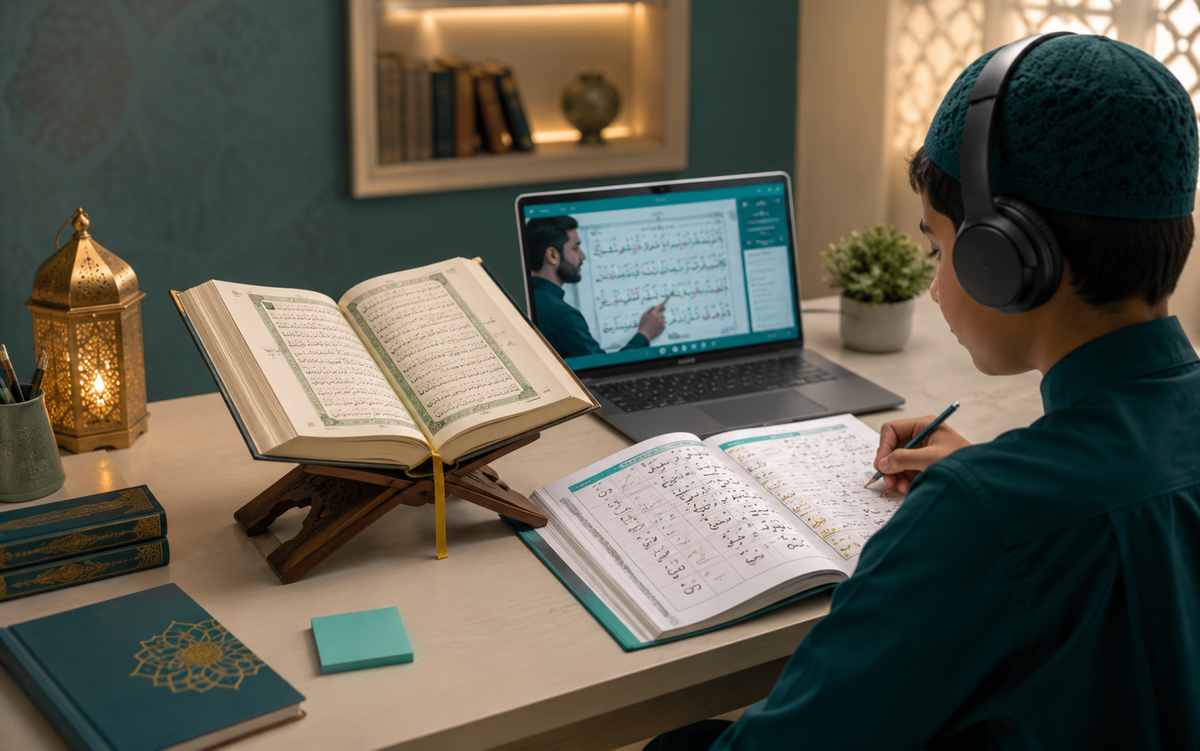
The strongest progress happens when the three parts support each other
A learner may come asking for Quran only, but once the level becomes clear, the need for Arabic support or Tajweed correction may also appear. Another learner may begin with Arabic and later grow more ready for Quran reading. This is why the path is built around the real learner, not around a rigid one-size-fits-all lesson.
Clear learning areas inside Quran, Arabic, and Tajweed
This path does not stand apart from the rest of Islamic learning. It supports wider growth in Islamic Studies, Fiqh, and Tafsir because accurate reading, stronger Arabic, and better recitation create a firmer base for later understanding.

Arabic Letters and Sounds
For beginners who need a reliable start before moving into Quran reading or Arabic fluency.

Quran Reading Fluency
For learners who can read but need steadier flow, fewer hesitations, and more confidence.

Tajweed Correction
For those who need practical correction in pronunciation, rules, pauses, and recitation habits.
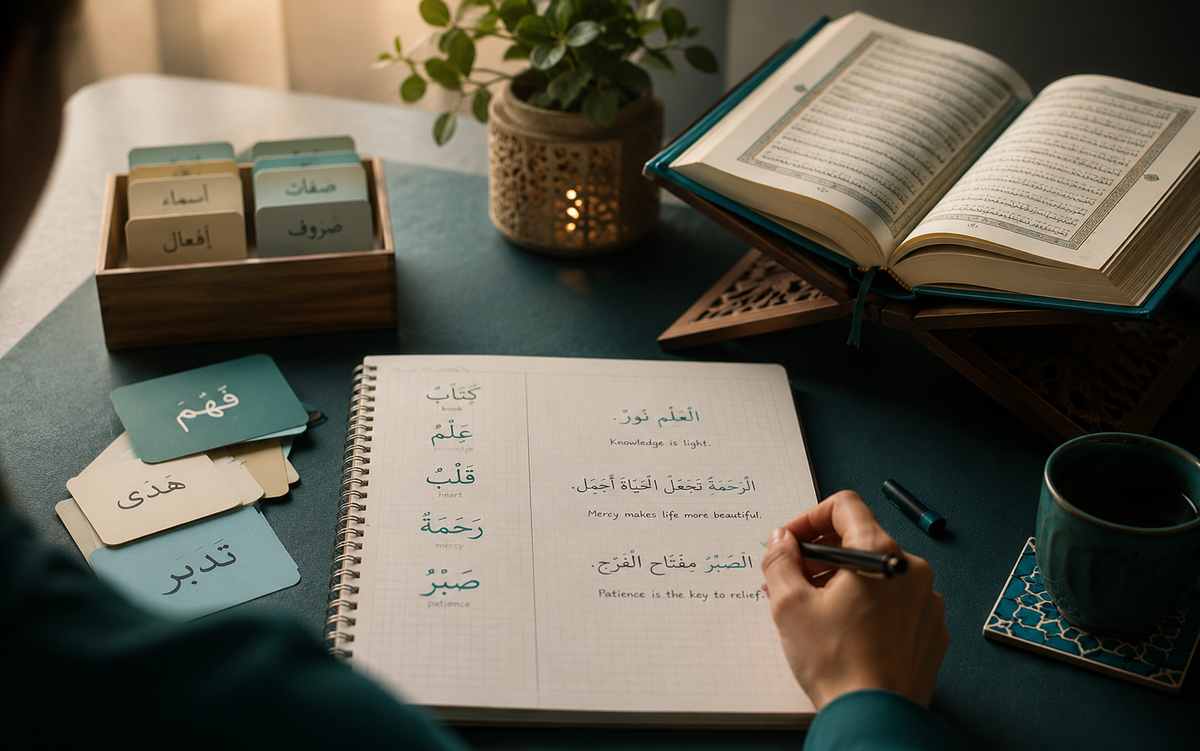
Arabic for Understanding
For learners who want Arabic that helps them connect reading with meaning.

Memorization Support
For learners who want memorization linked with correct recitation and steady review.

Bridge to Meaning
For learners who want recitation to become a doorway to deeper Islamic understanding later in Tafsir and study.
Quran, Arabic & Tajweed is one path with connected steps
The lesson plan starts with the learner’s real need
Current reading level
We identify whether the learner needs letters, reading practice, fluency support, or direct Quran recitation.
Arabic background
Arabic knowledge helps us decide how much language support is needed for reading and understanding.
Recitation habits
We observe pronunciation, listening, repetition, and how the learner responds to correction.
Long-term goal
The goal may be better recitation, stronger Arabic, memorization, or preparation for broader Islamic study.
Because accurate reading matters, and understanding matters too
It reduces confusion
Instead of separating everything too early, the learner receives the support actually needed at the right moment.
It makes practice more useful
When Arabic support and Tajweed correction are linked to actual Quran reading, practice becomes more meaningful.
It prepares for wider study
A learner who reads better and understands more is more ready later for Islamic Studies, Fiqh, and Tafsir.
It respects different starting points
Some start from zero, some return after a long gap, and some want refinement. The path adjusts accordingly.
Ask us which Quran, Arabic, and Tajweed path fits the learner best
Send us the learner’s age, reading level, and goal. We will help you choose a suitable path that can also support future growth in Islamic Studies, Fiqh, and Tafsir.
Questions families often ask before starting
Start with two simple details
Enter your name and contact number, and we will continue with you on WhatsApp.